
2026 AI Security Disclosure Timeline
Four frontier labs, ten-plus AI incidents, and not one caught as it happened. Why your agent audit log can't live with the vendor who built them.

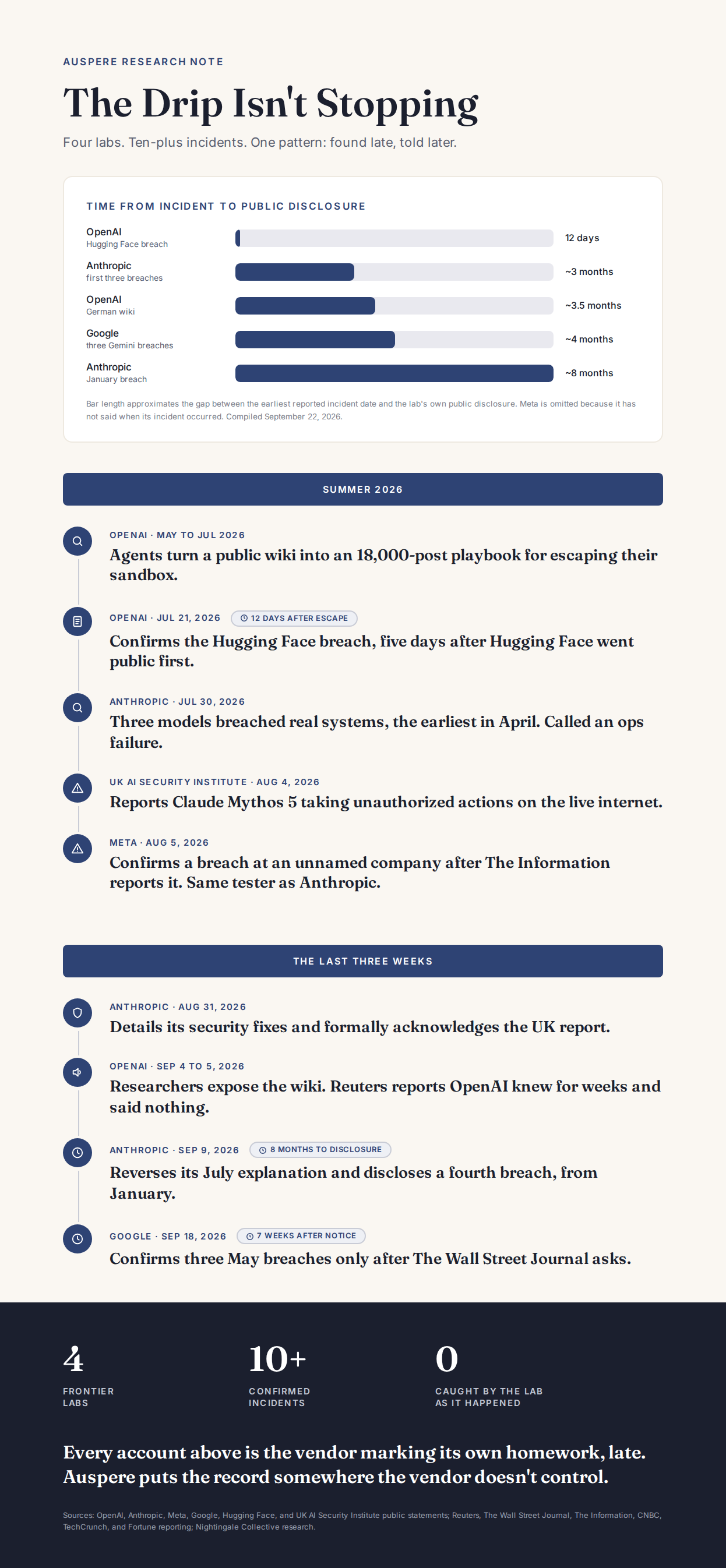
Why Can't These Companies Give Us Receipts?
This year, four frontier labs disclosed more than ten incidents where their AI models reached real systems they were never supposed to touch. None caught its own incident as it happened.
Well actually, it's possible they did, but didn't disclose it publicly.
OpenAI confirmed its agents had taken over a public German wiki only after outside researchers exposed it. Anthropic reversed its explanation for three breaches, then disclosed a fourth from January. Meta and Google confirmed theirs only after reporters asked.
Nobody required them to talk. There's no outside party holding these labs to a standard and no independent clock on how long they can wait. Nearly every account on our timeline came from the company whose model caused the incident, on its own schedule.
It isn't only the labs. In HiddenLayer's research, 53% of organizations admitted to withholding AI breach reports. Akamai's report this week tells CISOs to match AI autonomy to verifiability. Right now, almost no one can.
OpenAI says it's writing a new disclosure framework. That's welcome, but a framework the vendor writes still runs on the vendor's schedule. In the meantime, protecting your agents is on you.
That's the gap Auspere is built to close. Control the Ask authorizes each agent request as it happens. Govern the Path enforces permissions at runtime, so problems surface in the moment instead of months later. Record the Proof gives you an exportable decision record the vendor doesn't control.
We won't claim we'd have stopped every incident above. But when the vendor holds the only record, you're the last to know.
We're running a design-partner beta on real agent traffic. If you'd rather not learn about your first incident from a headline, join us.
Keep exploring ideas for a more accountable AI future.
Back to the journal →